
An honest guide
Can an AI be your doctor?
Many people now type “AI doctor” into a search bar. The honest answer: an AI health assistant can help you understand your health, but it cannot replace a clinician. Here is where the line is, and how to use AI for health questions safely.
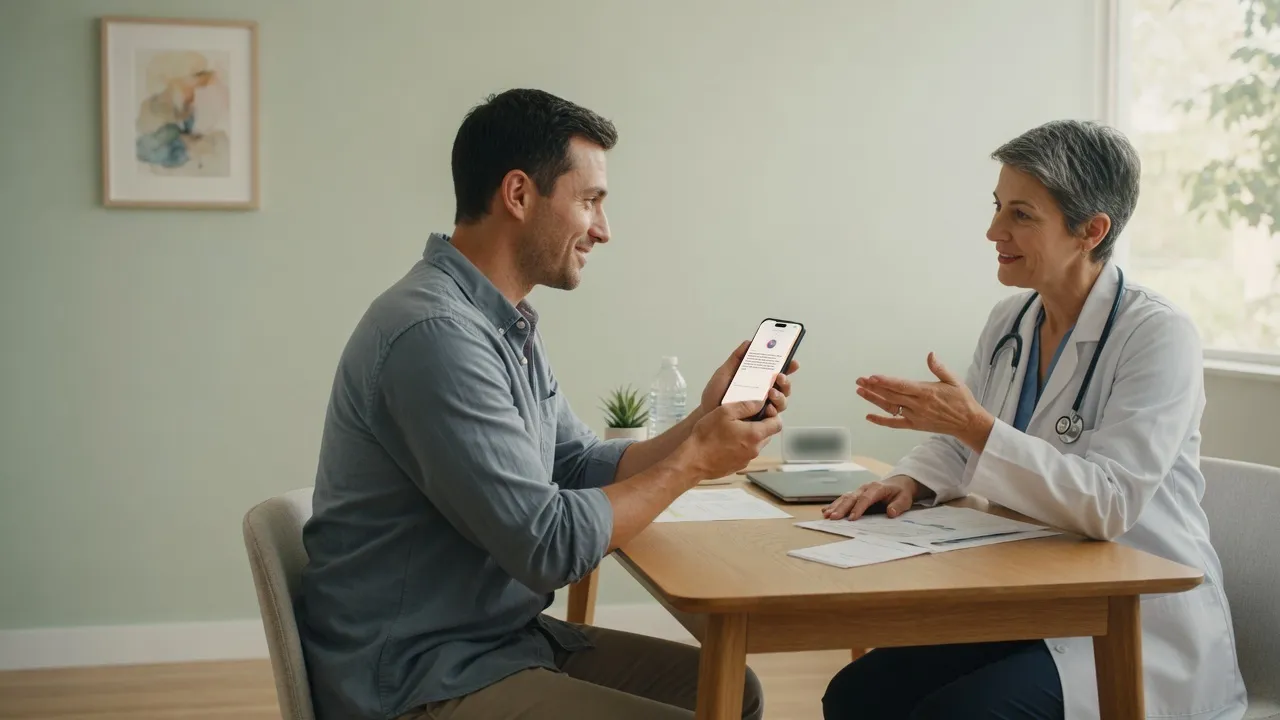
What an AI health assistant can do well
- Explain medical terms and lab results in plain language
- Answer general health questions at any hour, with sources
- Keep your symptoms, medications and history together so nothing gets lost
- Help you prepare questions before a visit and understand the plan after it
- Spot trends in your own data, such as a blood pressure that slowly rises
What only a clinician can do
- Examine you in person and order the right tests
- Diagnose a condition and weigh it against everything else about you
- Prescribe, change or stop medications
- Handle emergencies
- Take responsibility for your care
Chatbots, symptom checkers and health assistants: what is the difference?
General AI chatbots
Answer from what they learned in training, without knowing you. Useful for explaining a topic, but they can state errors confidently and do not always cite sources.
Symptom checkers
Walk you through a fixed questionnaire and suggest how urgently to seek care. They do not know your history and do not give a diagnosis.
A health assistant like ECHNA
Answers in the context of your own record (conditions, medications, allergies, recent labs), cites sources, and points you to human help when something sounds urgent. Still not a diagnosis.
How to use AI for health questions safely
- Use AI to understand and prepare; let a clinician decide
- Ask where an answer comes from. A good assistant cites its sources
- Never start, stop or change a medication based on an AI answer alone
- Share only what you are comfortable sharing, and check how the app protects your data
- If an answer worries you, or your symptoms get worse, contact a clinician
Where ECHNA fits in
ECHNA is the AI health assistant in VHT. She answers your health questions next to your own record, explains lab results, cites medical literature in Advanced mode, and routes you to human help when something sounds urgent. She is built to support your care team, not to replace it. The Free plan includes 15 ECHNA messages a day.
Frequently asked questions
Is there a free AI doctor?
No AI is a doctor. Several free tools, including general chatbots and symptom checkers, can answer health questions and help you understand information, but none of them can diagnose you or prescribe treatment. VHT's Free plan includes ECHNA, its AI health assistant, with 15 messages a day.
Can AI diagnose me?
No. An AI tool can suggest possibilities, but a diagnosis needs a clinician who can examine you, order tests and weigh your full history. Treat any AI answer as information to discuss with a clinician, not as a diagnosis.
Is it safe to ask ChatGPT medical questions?
General chatbots can explain medical topics, but they do not know your history, can state errors confidently and may not cite sources. Check important answers with a clinician, and think twice before sharing sensitive health details with a tool that is not built to protect them.
Can an AI health assistant read my lab results?
Yes. A health assistant can explain what each marker measures and how your result compares with your lab's reference range. ECHNA reads results next to your history and earlier tests. Only a clinician can tell you what they mean for your diagnosis and treatment.
What should I do if an AI answer worries me?
Do not wait. Contact your clinician, a nurse line or an urgent care service and describe your symptoms. If it could be an emergency, call your local emergency number.
Educational only. This page is general information and does not replace personal medical advice. ECHNA and other AI tools do not diagnose or treat medical conditions.