
Lab results explained
Lab Results Explained
What do my lab results mean? Plain-language guides to the blood tests on a routine panel: what each marker measures, typical ranges, common reasons it runs high or low, and what to ask your clinician.
Browse by panel
Blood tests are usually ordered in groups. Start with the panel on your report, then open each test for the details.
- Lipid panel (cholesterol test)LDL, HDL and triglycerides: what a cholesterol test reports, whether to fast, and how the numbers are read together.LDL cholesterolHDL cholesterolTriglyceridesView the panel
- Diabetes blood testsHbA1c and fasting glucose: how the two tests screen for prediabetes and diabetes, and why results are confirmed.HbA1c (A1C)Fasting blood glucoseView the panel
- Complete blood count (CBC)RDW, MCH, ferritin and B12: what a CBC shows about your red cells and why iron and B12 are often checked next.RDW (red cell distribution width)MCH (mean corpuscular hemoglobin)Ferritin (iron stores)Vitamin B12View the panel
- Kidney, liver and inflammation testseGFR, ALT, CRP and ESR: what they show about your kidneys, liver and inflammation, and why they are read together.eGFR (kidney function)ALT liver enzymeC-reactive protein (CRP)ESR (sed rate)View the panel
Blood test guides
- CholesterolLDL cholesterolThe “bad” cholesterol: healthy ranges, why one reading is not enough, and how lifestyle and medication lower it.Read the guide
- CholesterolHDL cholesterolWhat your “good” cholesterol number means, why low HDL raises heart risk, and why very high HDL is not always better.Read the guide
- CholesterolTriglyceridesNormal, borderline, high and very high triglycerides, what pushes them up, and why very high levels need prompt care.Read the guide
- Blood sugarHbA1c (A1C)What your A1C number means, the normal, prediabetes and diabetes ranges, and what can make it misleading.Read the guide
- Blood sugarFasting blood glucoseNormal, prediabetes and diabetes ranges for fasting blood sugar, low blood sugar, and what can throw the result off.Read the guide
- ThyroidTSH (thyroid test)Why a high TSH usually points to an underactive thyroid and a low TSH to an overactive one, and what is tested next.Read the guide
- IronFerritin (iron stores)What low ferritin says about your iron stores, why high ferritin often reflects inflammation, and what is checked next.Read the guide
- VitaminsVitamin DDeficient, adequate and high vitamin D ranges in ng/mL and nmol/L, who runs low, and how to raise it safely.Read the guide
- VitaminsVitamin B12What low or borderline B12 means, who is more likely to run low, symptoms to know, and what is tested next.Read the guide
- KidneyseGFR (kidney function)What your eGFR number means, the kidney function stages, and why one low result is not a diagnosis.Read the guide
- InflammationC-reactive protein (CRP)What a high CRP or hs-CRP result means, the difference between infection-level and heart-risk ranges, and what lowers it.Read the guide
- LiverALT liver enzymeWhat a high ALT means, the most common causes (often fatty liver), and when a raised result needs a quick follow-up.Read the guide
- Blood countRDW (red cell distribution width)What a high RDW on your complete blood count means, and why it is read together with MCV, hemoglobin and iron.Read the guide
- Blood countMCH (mean corpuscular hemoglobin)What low or high MCH means, how it relates to iron, vitamin B12 and folate, and the related MCV and MCHC values.Read the guide
- InflammationESR (sed rate)What a high sed rate means, why normal ranges rise with age, and how ESR differs from CRP.Read the guide
How to read any lab result
- 01
Use your lab's reference range
Ranges differ between labs, methods and units (for example mg/dL or mmol/L). The range printed next to your result is the one that applies to it.
- 02
Look at the trend, not one number
Reference ranges are usually set so that about 1 in 20 healthy people falls outside them on any single test. A result slightly out of range is common; a steady change over several tests says more.
- 03
Read related markers together
Many tests only make sense next to their neighbours: RDW with MCV and hemoglobin, ALT with AST, CRP with your symptoms. Your clinician reads them as a set.
Have a question about your own results?
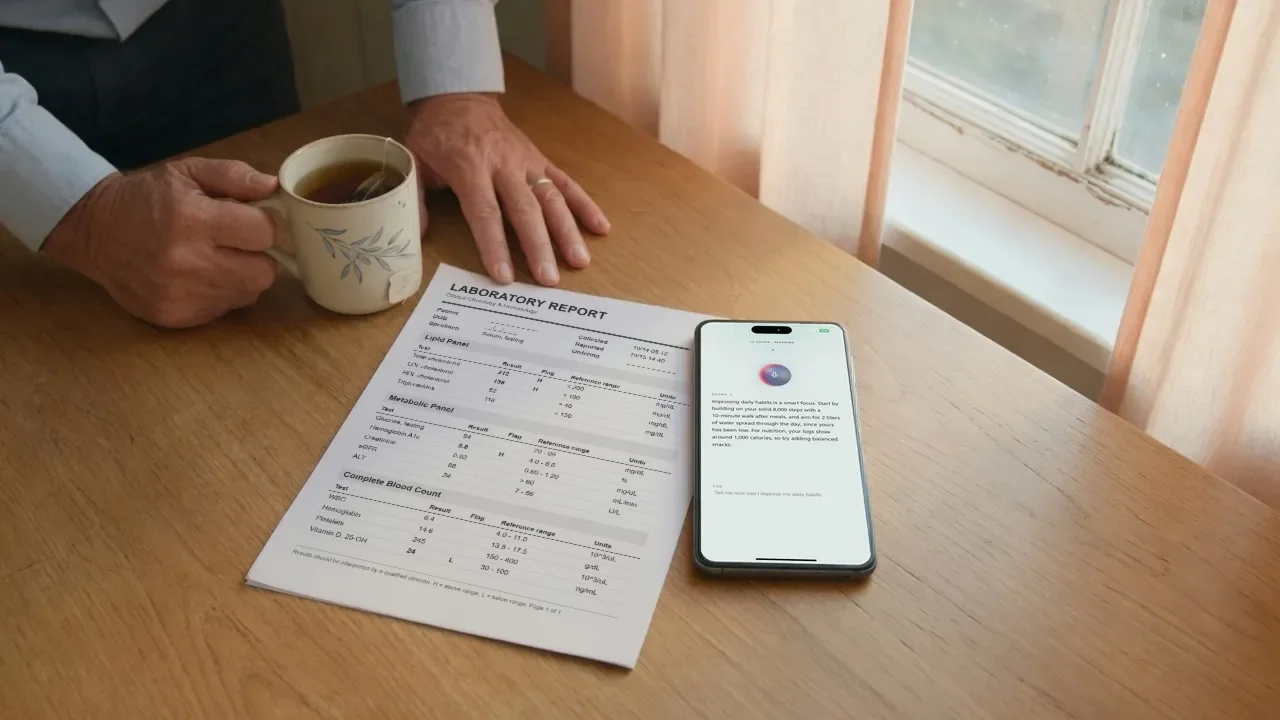
ECHNA, the AI health assistant in VHT, explains your results in plain language next to your history and trends, and helps you prepare questions for your clinician. She does not diagnose.
Educational only. These guides are general information and do not replace personal medical advice. Talk to your clinician about your results and what they mean for you.